ELT Process
-
Extract
- Pull data from multiple sources (API, databases)
-
Load
- Move Raw data into a centralized data warehouse
-
Transform
- Clean and model data using SQL or dbt
Data Movement Across Systems
- Data flows from
Source -> Staging -> Warehouse - Manage using tools like Airflow, Fivetran, Airbyte
- Enables automation, scalability, and version control
Best Practices
- Maintain clear data lineage and audit trails
- Automate workflows using orchestration tools
- Validate data after each transformation stage
Raw, Staging, and Mart Layers
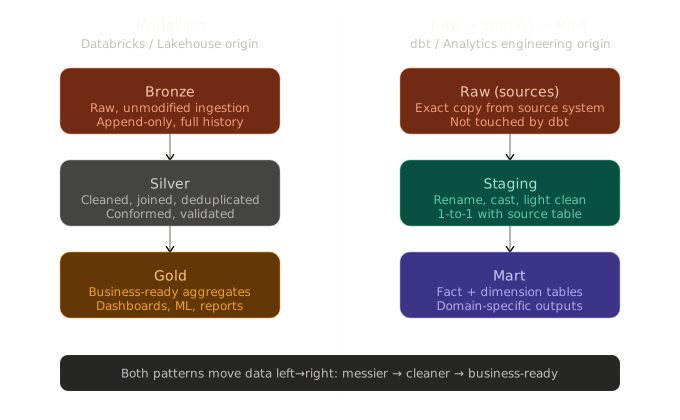
Naming & Schema Management
- Follow consistent naming conventions
- snake_case for columns and tables
- Use full descriptive names
- Avoid abbreviations unless widely known
- Use schemas to separate environments (raw, stg, mart)
- Maintain documentation and version control for clarity
Core Concepts of Cleaning and Standardization
1. Preserving Source Structure While Fixing Data Quality Issues
Staging models should remain close to the source tables but with improved quality.
- Keep the same grain as the source
- Use the same key structures where possible
- Apply necessary fixes without introducing business logic
2. Consistent Naming and Typing of Columns
Staging is the best place to standardize column formats across different sources.
- Rename columns into clear, consistent conventions (e.g., snake_case)
- Convert data types (dates, integers, timestamps) into warehouse-friendly formats
- Apply consistent timezone handling where needed
3. Cleaning Nulls, Duplicates, and Invalid Records
Early removal of bad data prevents errors later in the model.
- Replace unexpected nulls with defaults only when appropriate
- Remove exact duplicates from ingestion
- Flag or filter out records that violate schema rules
4. Normalizing Text and Categorical Fields
Text fields often vary widely across systems; staging resolves this variation.
- Trim whitespace and fix inconsistent casing
- Standardize categorical values (e.g., "Active," "active," "ACTIVE" → "active")
- Remove special characters where applicable
Transformations That Belong in the Staging Layer
5. Basic Structural Fixes
Focus on transformations that improve data quality without changing the meaning of the data.
- Renaming ambiguous fields
- Splitting or combining raw columns where clearly needed
- Converting boolean flags into standard values (true/false)
- Parsing JSON fields into structured columns
6. Data Type Standardization
Staging ensures consistency before joining or aggregating data.
- Convert all date fields into proper date/timestamp types
- Change numeric fields stored as strings into numeric types
- Align units of measure (e.g., converting cents to dollars)
7. Handling Slowly Changing Elements and Keys
Staging is where raw surrogate keys and identifiers are standardized.
- Generate clean natural keys where needed
- Apply consistent uniqueness rules
- Prepare stable join keys for the next modeling layers
8. Source-Specific Quirks and Fixes
Many raw systems contain format or logic inconsistencies.
- Resolve mismatched case sensitivity
- Correct broken timestamps
- Fix common extraction issues (extra characters, formatting mismatches)
- Normalize geographic data (country codes, state names, etc.)
Operational Considerations
9. Avoid Business Logic in Staging
The staging layer should not apply metrics, aggregates, or KPI definitions.
- No revenue calculations
- No rollups, window functions, or derived metrics
- No business-specific filters (e.g., "active customers only")
10. Ensuring Reproducibility and Transparency
Staging models must be easy to audit and debug.
- Keep logic simple and well-documented
- Make transformations explicit and readable
- Ensure model lineage clearly flows from raw → staging → core models